Institutional FX Insights: Credit Agricole 30/10/26
Mark your calendars for November 3rd!
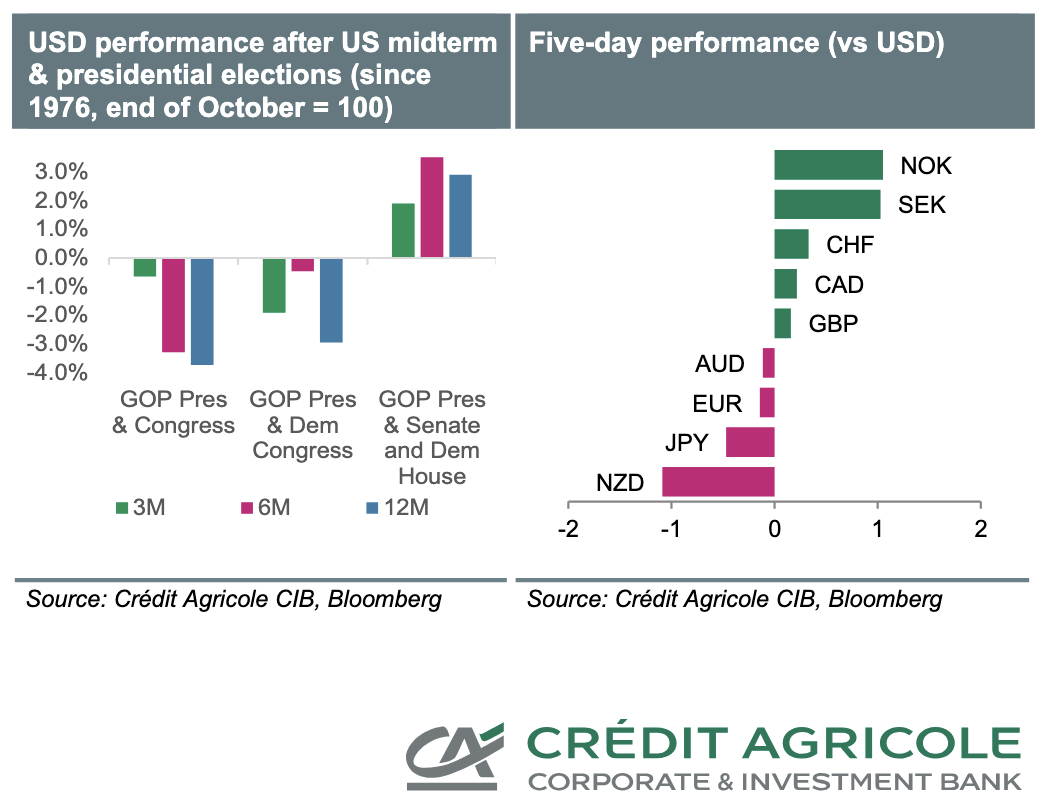
As the US midterm elections approach, betting markets are leaning towards a Democratic victory that might just tip the balance of power in Congress. Our recent analysis dives deep into how the US dollar has reacted post-elections since 1976. We found that the dollar's performance hinges on whether Democrats gain control of just the House or both the House and the Senate. If they only secure the House, we typically see a robust rebound in the dollar; however, a sweep of both chambers often leads to a sell-off.
The dynamics affecting the dollar post-midterms are further complicated by two opposing forces that could unfold in the coming months. Right after the elections, investors will likely keep a close eye on any signals from the Trump administration regarding a potential escalation of tensions in Iran, which could enhance the allure of the dollar as a safe haven. However, any initial positive momentum for the dollar might be short-lived, especially if another TACO (Tax Cuts and Jobs Act) situation arises soon after. Additionally, the ongoing struggles of technology stocks could dampen the dollar’s safe-haven appeal.
Looking further ahead, we anticipate a legislative stalemate in Congress following the midterms, which could hinder fiscal support for the economy and raise the risk of government shutdowns—definitely not good news for the dollar. Recent discussions with clients reveal growing concerns that a Democratic win might stifle the booming AI investment sector, which, given its significant impact on the economy, could pose further risks to the US economic outlook for next year. Combined with our more dovish forecast for the Fed in 2027, we’re adopting a bearish stance on the dollar over the next 6 to 12 months.
In the coming week, FX investors will be keeping an eye on the US Non-farm payrolls and the ISM reports for October, alongside comments from the Federal Reserve. The Bank of England is likely to raise rates but may remain vague about future increases, leaving the already overvalued GBP susceptible to fluctuations. Eurozone investors will be focused on inflation data, ECB speeches, and movements in the OAT market. Meanwhile, we expect a hawkish rate hike from the Reserve Bank of Australia to bolster the Australian dollar. Strong domestic demand and rising inflation risks might prompt the Riksbank to consider rate hikes as well, while the Norges Bank is expected to pause following last month’s increase.
Disclaimer: The material provided is for information purposes only and should not be considered as investment advice. The views, information, or opinions expressed in the text belong solely to the author, and not to the author’s employer, organization, committee or other group or individual or company.
Past performance is not indicative of future results.
High Risk Warning: CFDs are complex instruments and come with a high risk of losing money rapidly due to leverage. 68% and 74% of retail investor accounts lose money when trading CFDs with Tickmill UK Ltd and Tickmill Europe Ltd respectively. You should consider whether you understand how CFDs work and whether you can afford to take the high risk of losing your money.
Futures and Options: Trading futures and options on margin carries a high degree of risk and may result in losses exceeding your initial investment. These products are not suitable for all investors. Ensure you fully understand the risks and take appropriate care to manage your risk.
Patrick has been involved in the financial markets for well over a decade as a self-educated professional trader and money manager. Flitting between the roles of market commentator, analyst and mentor, Patrick has improved the technical skills and psychological stance of literally hundreds of traders – coaching them to become savvy market operators!